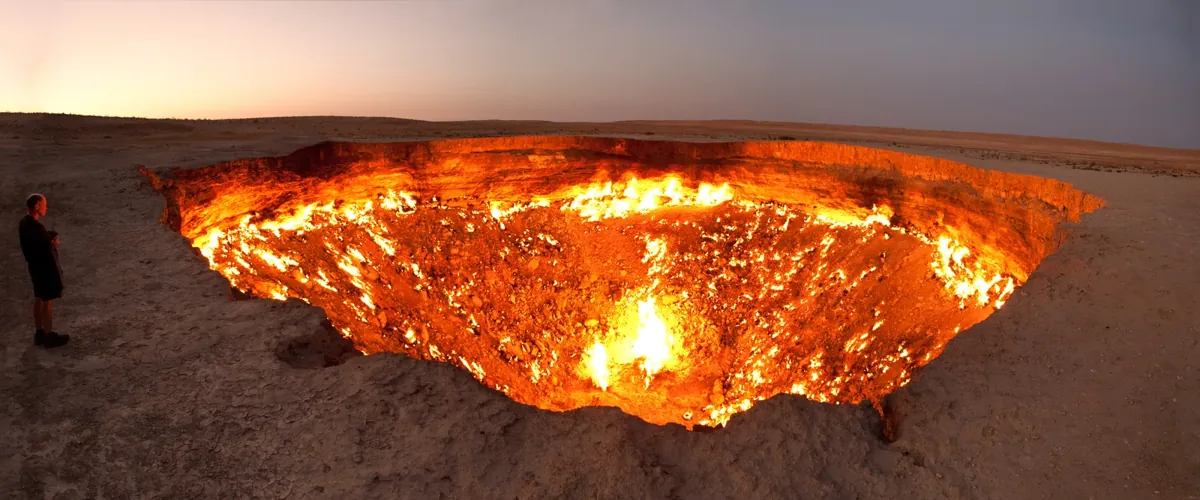
Off the coast of Belize, near the center of Lighthouse Reef, lies a near-perfect circular marine sinkhole measuring 318 meters (1,043 feet) across and 124 meters (407 feet) deep. Known as the **Great Blue Hole**, this iconic geological marvel appears as a dark indigo iris set against the turquoise shallows of the Caribbean Sea. Made world-famous by oceanographer Jacques Cousteau in 1971, the hole holds extraordinary geological clues about Earth's glacial past.
Formation During the Glacial Epochs
The Great Blue Hole was not formed underwater. During the Last Glacial Period, when sea levels were over 100 meters lower than today, the sinkhole was a massive terrestrial limestone cave system. Over tens of thousands of years, acidic rainwater percolated through the limestone bedrock, dissolving large subterranean caverns.
As the ice sheets melted around 12,000 years ago, rising oceans flooded the cave system, causing the heavy limestone ceiling to collapse downward, creating the dramatic vertical sinkhole visible today.
Underwater Stalactites and Anoxic Depths
In 2018, an expedition led by Fabien Cousteau and billionaire Richard Branson descended to the bottom of the Blue Hole using advanced submersibles. They mapped the interior walls in high-definition 3D, confirming the presence of colossal stalactites hanging at depths of 40 meters—some reaching lengths of 12 meters.
Below 90 meters, the water becomes completely stagnant and anoxic (devoid of oxygen), covered by a thick toxic layer of hydrogen sulfide gas. In this dark, oxygen-free zone, no marine life survives, preserving organic debris, fallen sea life, and ancient sediment layers intact for thousands of years.
Scientific References and Sources
- Gischler, E., et al. Giant Submarine Sinkholes: Archives of Holocene Environmental Change. Journal of Coastal Research (2008).
- Cousteau, Jacques-Yves. The Ocean World of Jacques Cousteau. Harry N. Abrams, 1973.