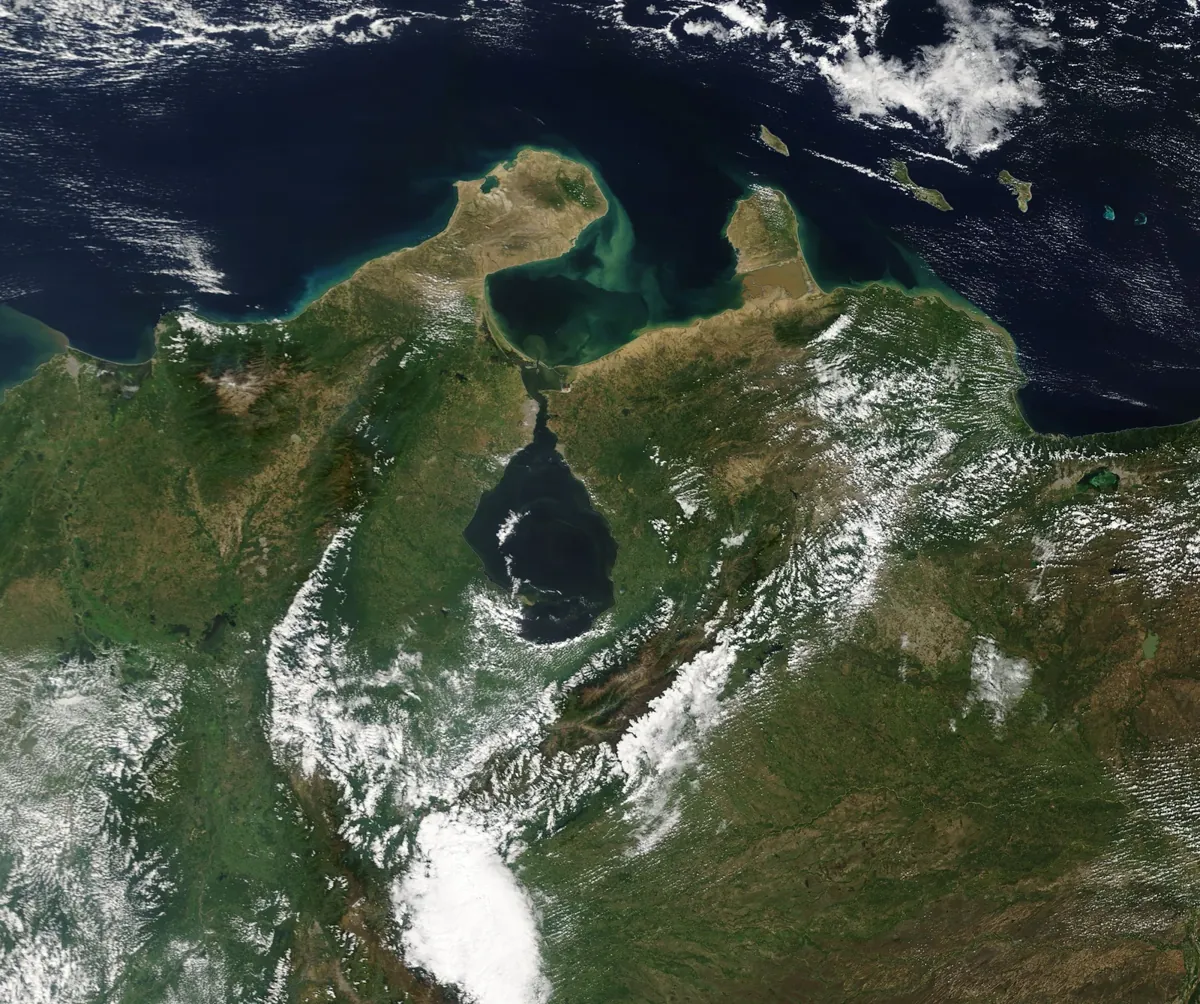
Over the quiet waters where the Catatumbo River empties into Lake Maracaibo in northwestern Venezuela, the night sky erupts into an astonishing display of silent electrical power. For up to 300 nights a year, starting shortly after dusk, continuous lightning flashes illuminate the clouds at a rate of 280 strikes per hour, lasting up to 10 hours per night. Known locally as Relámpago del Catatumbo (the Catatumbo Lightning), this natural phenomenon generates more atmospheric ozone than almost any other single site on Earth.
Historical Legend and Navigation Beacon
For centuries, indigenous Wayuu and Bari peoples revered the light show, believing it to be created by fireflies honoring the spirits of the ancestors. During the colonial era, Caribbean sailors referred to it as the "Lighthouse of Maracaibo," using its bright flashes—visible from over 250 miles away—to navigate the Gulf of Venezuela without a compass.
In 1595, the lightning even altered history. English privateer Sir Francis Drake attempted a surprise night raid on the Spanish fortification at Maracaibo, but the sudden, intense illumination of Catatumbo lightning exposed his fleet to Spanish shore batteries, repelling the attack.
The Atmospheric Engine Behind the Storm
What creates an everlasting storm in one precise geographic location? Atmospheric scientists point to a unique combination of topography, wind dynamics, and humidity:
- Topographic Funnel: Lake Maracaibo is enclosed on three sides by high mountain ranges—the Andes, the Cordillera de Mérida, and the Perijá Mountains.
- Thermal Wind Trade: During the day, intense tropical heat evaporates massive quantities of moisture from the warm lake surface. At night, cool mountain breezes rush down the slopes, colliding with the warm, humid air over the basin.
- Methane Enrichment: Swamps around the Catatumbo riverbed release vast volumes of methane gas produced by decomposing organic matter, which increases the electrical conductivity of the air column.
Global Climate and Environmental Conservation
Recognizing its ecological significance, the Guinness Book of World Records officially certified Catatumbo in 2014 as having the highest concentration of lightning strikes on the planet (250 strikes per square kilometer annually). Environmental groups continue to petition UNESCO to declare Lake Maracaibo and the Catatumbo basin a World Heritage natural site.
Scientific References and Sources
- Muñoz, A. G., et al. Towards a Seasonal Forecast System for the Catatumbo Lightning. Bulletin of the American Meteorological Society 97.11 (2016): 2101-2114.
- NASA Earth Observatory. The World's Lightning Capital. EarthObservatory.nasa.gov (2016).